The Food and Beverage (F&B) sector in Saudi Arabia is witnessing rapid development and unprecedented competitiveness. Therefore, relying on traditional tools to manage daily operations is no longer suitable.
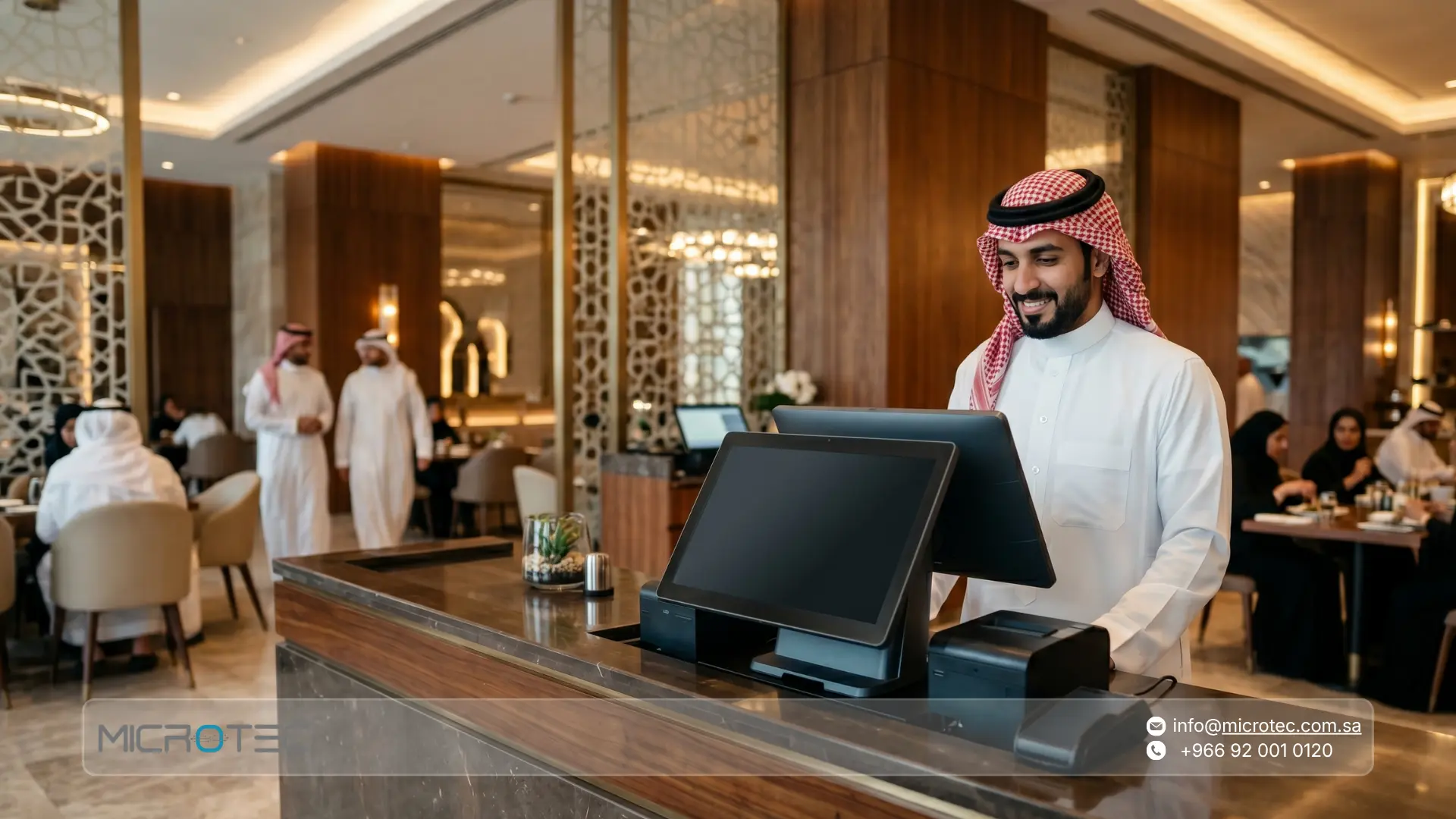
Choosing the best pos system for restaurant operations is no longer limited to a cash register, but has become a fundamental requirement to adopt an integrated system that connects floor management, kitchen order routing, inventory control, and financial reconciliation in a single operational environment.
In this guide, we review the advanced operational and technical criteria that help you as a decision-maker choose the best pos system for restaurants in Saudi Arabia. Read on!
The Hidden Cost of Using a Retail System Instead of a Dedicated Restaurant System
Before diving into the selection criteria for a point of sale system, we must highlight one of the most costly strategic mistakes in the hospitality sector: trying to adapt a non-dedicated system for restaurants to reduce initial expenses. Some owners fall into the trap of searching for a retail e-invoicing pos system for restaurant operations or cafes.
However, operational reality proves that the architecture of the two systems is fundamentally different. Retail systems are built for quick handling of barcodes, ready-made products, and batch numbers. In contrast, a restaurant point of sale software requires a software environment that manages a complex order cycle, starting from the table, passing through routing orders to kitchen screens, and ending with the accurate deduction of recipe ingredients from inventory.
Realizing this fundamental difference is the first step in directing your technical investment towards the right path that protects your profits and does not disrupt your sales. This leads us directly to the basic criteria upon which you must base your decision.

Key Criteria for Choosing a POS System for Your Restaurant in Saudi Arabia
To determine your appropriate choice and reach the best POS system in Saudi Arabia for your restaurant or cafe, your evaluation should not be limited to price alone. Rather, the focus must be on operational reliability and the ability to keep pace with the challenges of peak times.
Here are the most important criteria that must be available in any system you rely on:
1. Cashier Speed and User-Friendly Interface:
During peak hours, service speed and reducing queues are a top priority. Therefore, when choosing a restaurant pos system, make sure the following points are available:
- A flexible and intuitive user interface that reduces training time for new employees.
- Smooth and fast navigation between menus to speed up work.
- The ability to add and register orders with high flexibility.
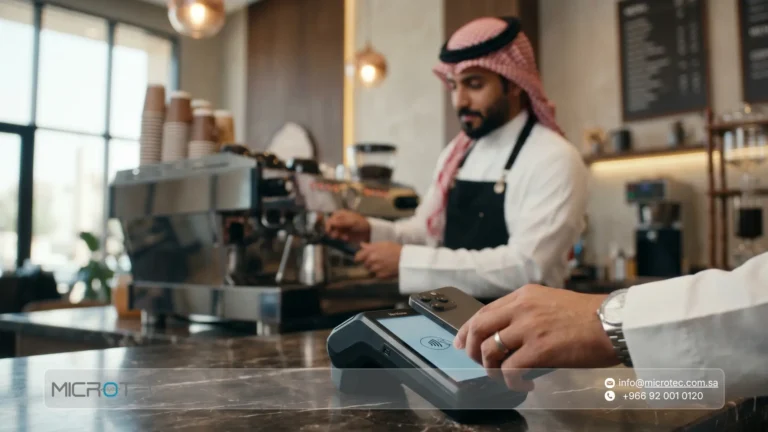
- Comprehensive support for contactless payment options to ensure smooth service.
2. Flexible Table Management and Bill Splitting:
The software is classified as the best POS system for quick-service and fine-dining restaurants when it provides visual tracking of table status, seamless options for splitting bills, and easy modification of orders, such as adding or removing ingredients.
3. Food Cost Control and Recipe Management:
An advanced POS system for restaurants excels in its ability to link sales to inventory via the recipe management feature. Once a specific dish is sold, the system automatically deducts sub-ingredients from the warehouse, giving management accurate visibility into the Cost of Goods Sold (COGS).
4. Direct Integration with Delivery Apps (Aggregators):
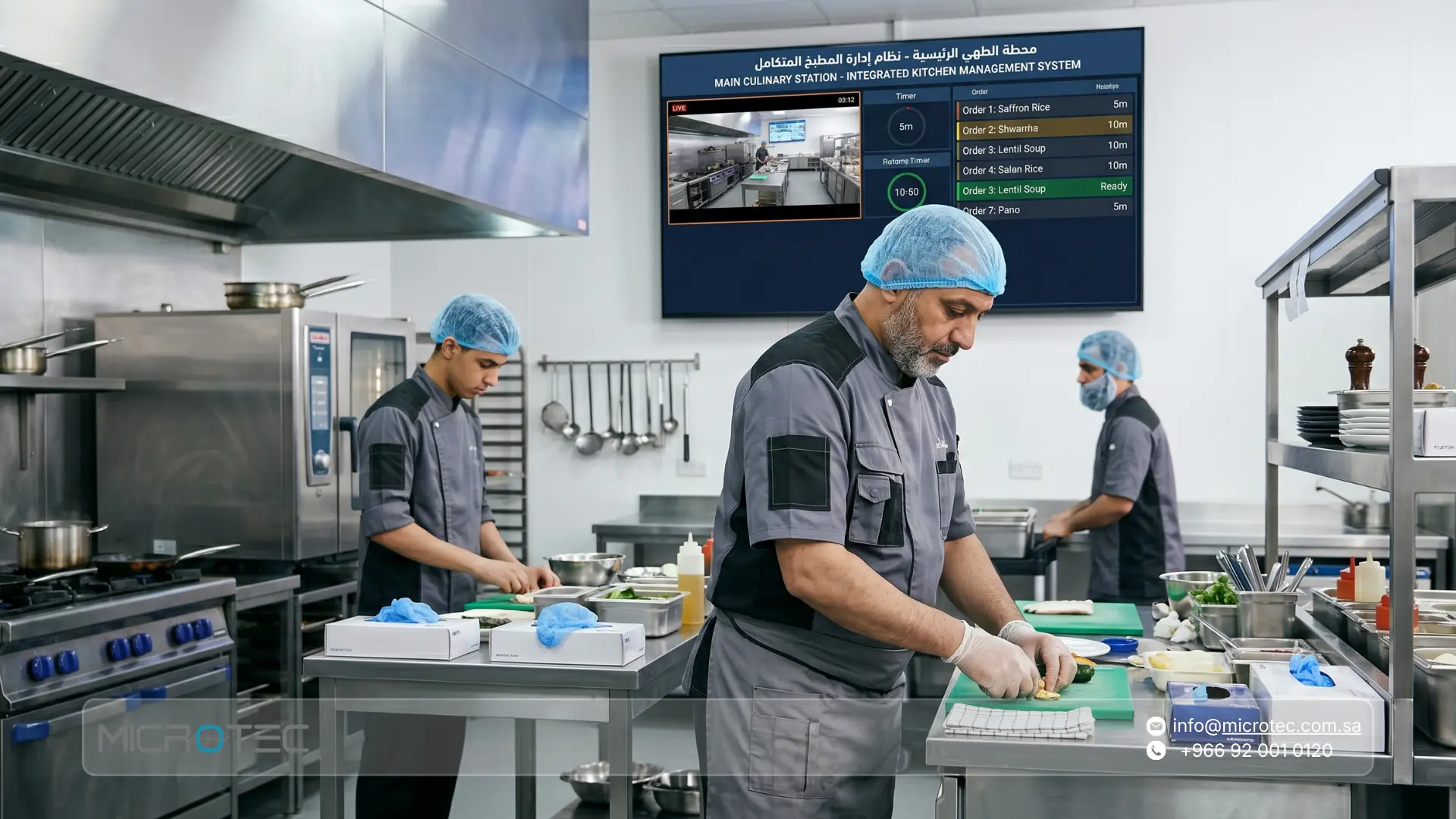
Many restaurants in Saudi Arabia suffer from the tablet chaos of various delivery apps, causing delays and manual re-entry of orders. Professional restaurant point of sale software integrates all external delivery orders with the cashier screen and Kitchen Display System (KDS) screens into a unified flow, reducing errors and speeding up preparation.
5. Loyalty Programs and Customer Relationship Management (CRM):
The cost of acquiring a new customer is much higher than retaining a current one. Therefore, the system must provide tools to register customer data, track preferences, and issue automated points and rewards, turning the cashier from a collection tool into a marketing tool that increases the customer retention rate.
6. Mobile POS (mPOS) and Self-Service:
To relieve pressure during peak times, it is essential that the system supports working via mobile tablets with waiters to take orders directly from the table and send them to the kitchen, or integration with self-service kiosks to reduce labor costs.
7. Permissions Management and Shift Tracking:
To prevent manipulation or unjustified discounts, the system must include strict control over employee permissions (via fingerprint or passcodes). Critical operations such as canceling bills are only performed with the manager’s approval, along with accurate tracking of attendance and departure hours linked to human resources.
Elevate your customers’ experience and speed up your daily operations by relying on the core features provided by Microtec’s O-RED restaurant system. Contact us now to get the best pos system for restaurant operations in Saudi Arabia!
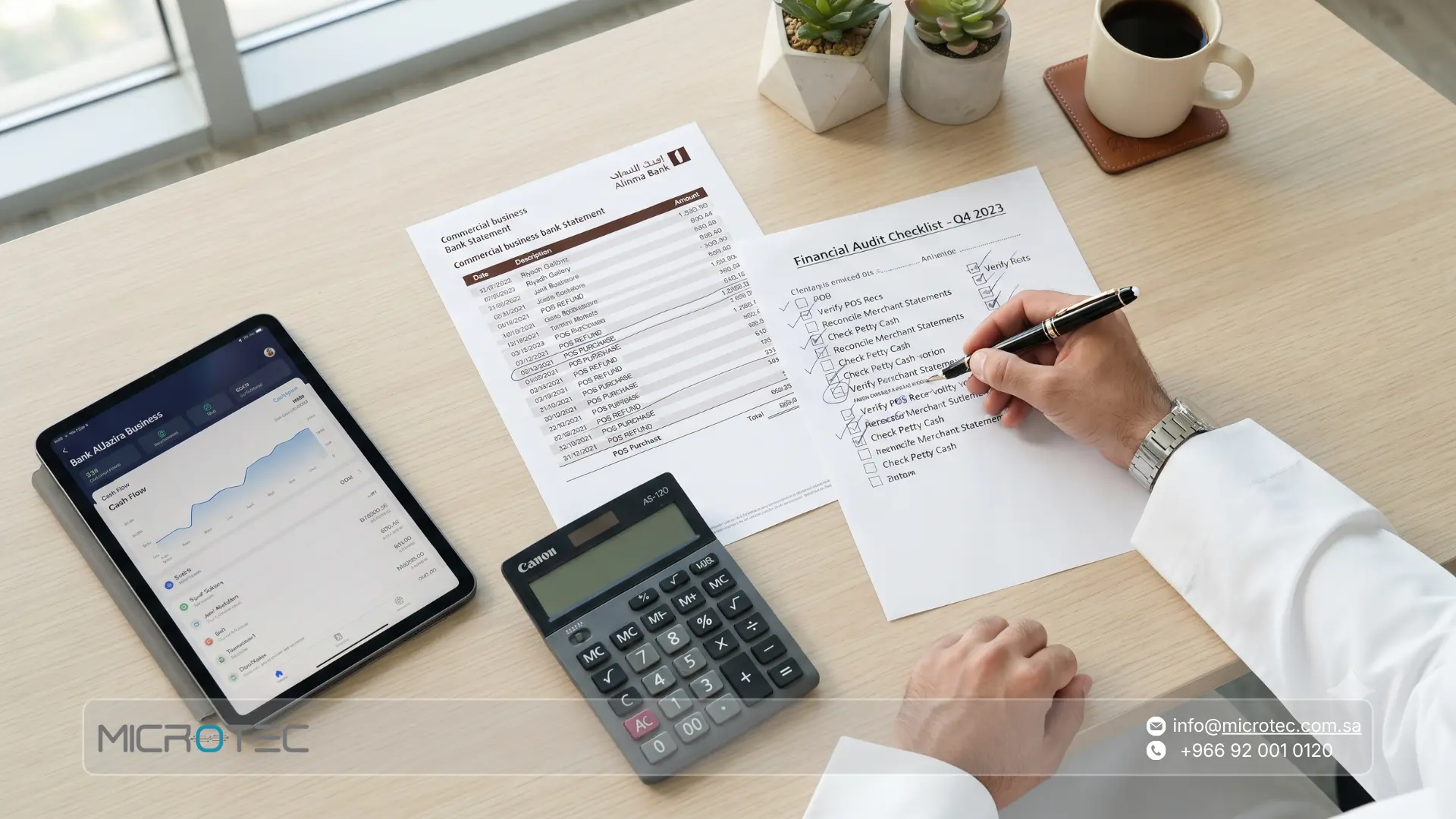
Also read: What is Meant by POS in a Bank Statement? A Merchant’s Guide

Tax Compliance and Secure Integration with ZATCA
Legal compliance is the foundation of business continuity in Saudi Arabia. Therefore, integrating point of sale systems with the Zakat, Tax and Customs Authority (ZATCA) in the Kingdom is an uncompromising mandatory requirement. To ensure compliance with Phase Two requirements (Integration Phase), the system must support:
- Issuing electronic invoices in (XML) format.
- Generating an encrypted QR Code.
- Offline Mode: Which allows the continued issuance of invoices with a cryptographic stamp even when the internet is disconnected, with automatic synchronization once the connection returns.
Contact us now at Microtec to get a trial version, ensuring your restaurant complies with the second phase of e-invoicing!
Centralized Transformation and Cashier Integration with ERP System
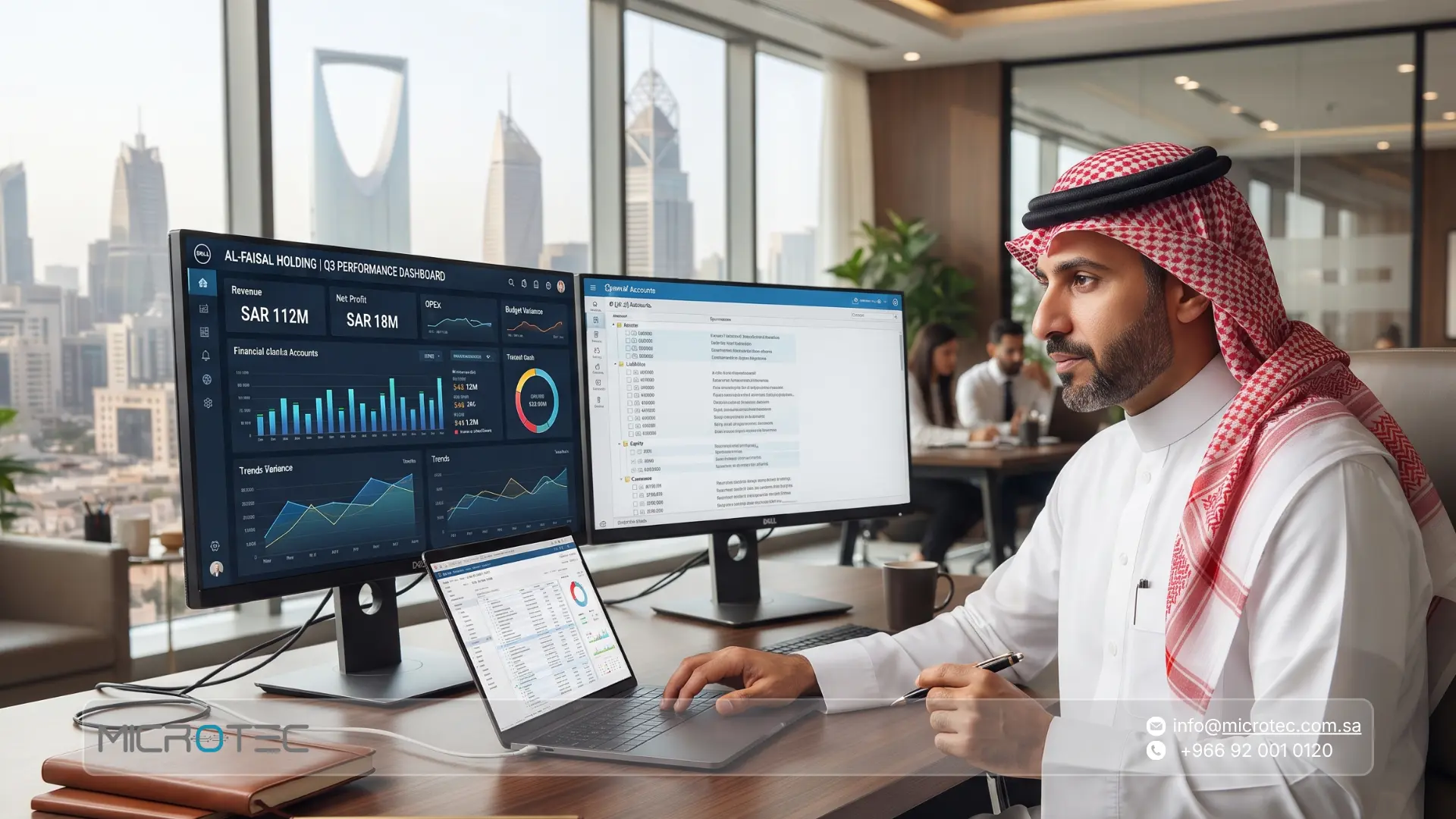
The true value of a pos system for restaurants rises when it is capable of integrating with backend operations, which is represented by linking with the Enterprise Resource Planning (ERP) system, as it completely eliminates double data entry and speeds up bank reconciliations.
Once the shift is completed, cashier sales are directly reflected in the chart of accounts and tax reports, which is the advanced level of control provided by the comprehensive Microtec ERP accounting system. This integration also provides predictive analytics that help in inventory planning and anticipating peak times.
Comprehensive Evaluation Table for Choosing the Best POS System for Restaurant Cashiers in Saudi Arabia
To facilitate your decision, the following table summarizes the most important advanced features and how they are covered in a specialized system:
| Technical Operational Standard | What Microtec’s (O-RED) Restaurant System Offers |
|---|---|
| ZATCA Compliance and Encryption | Full support for the second phase (Integration) with a reliable Offline mode. |
| Table Management and KDS Screens | Flexible visual interface, bill splitting, and automated order routing to the kitchen. |
| Inventory and Recipe Control | Accurate automatic deduction of ingredients to calculate COGS and monitor waste in real-time. |
| Delivery Apps and Loyalty | Integrating external sales channels and activating Customer Retention Programs (CRM). |
| Accounting Centralization (ERP) | Automated posting of entries and financial reconciliation for all branches from a single screen. |
Final Steps for Successful System Implementation
To move towards digital transformation confidently and implement the system successfully in your facility in Saudi Arabia, we recommend following this direct checklist:
- Determine Actual Needs: Count the number of tables, required cashier devices, and whether you need to link delivery orders or rely on mobile devices.
- Verify Tax Readiness: Ensure the service provider’s ability to link the system to the “Fatoora” platform.
- Book a Demo: Do not settle for theoretical promises; watch the real data flow from the cashier to the kitchen and then to accounting.
- Train the Work Team: Develop a simplified training plan for the floor and kitchen teams to ensure maximum utilization of the user interface.
Ultimately, your decision to choose the best pos system for restaurant operations is a direct investment in protecting your profits, organizing your inventory, and improving your customer experience. Get rid of complex and isolated systems, and start planning for the growth of your branches by adopting integrated cloud solutions designed for the food and beverage sector in the Saudi market.
Explore ERP and point of sale solutions for restaurants and various Saudi enterprises from Microtec and book a demo today!
Read more: The Accounting Chart of Accounts: Strategic Guide for Digital Transformation
Frequently Asked Questions About the Best POS System for Restaurants in Saudi Arabia 2026
1-What is pos system in a restaurant?
A pos system in a restaurant is the central hub consisting of specialized hardware and software used to process customer transactions, manage food orders, communicate seamlessly with the kitchen, and oversee the entire daily operations of the dining establishment.
2-What is the best pos system for restaurants?
The best system is the one that combines customer service speed, direct integration with the Enterprise Resource Planning (ERP) system to manage inventory and recipes, and full compliance with e-invoicing requirements (ZATCA), such as the O-RED system.
3-What is the best POS system for a multi-branch restaurant?
A system linked to a centralized system is the most suitable, as it allows you to monitor real-time sales, unify the chart of accounts, and transfer inventory between branches from a single control panel.
4-Can the cashier system work if the internet is disconnected?
Yes, advanced systems like O-RED support the “Offline Mode” feature to ensure the cashier continues to work, issue and store tax invoices, and then sync them automatically when the connection returns.
5-Is it enough to use a regular retail system to manage a restaurant?
It is absolutely not recommended. Restaurant systems provide vital tools that are not available in retail, such as Kitchen Display System (KDS) screens, table management, consolidating delivery orders, and calculating recipe costs down to the gram.